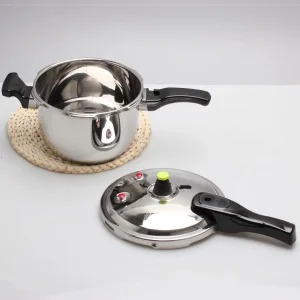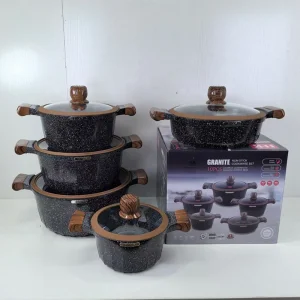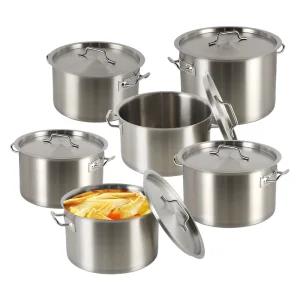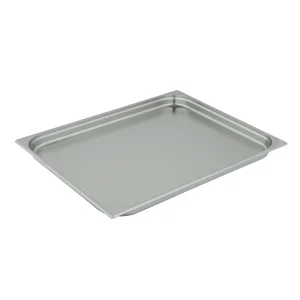
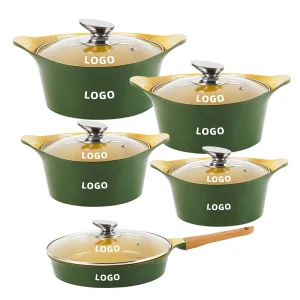
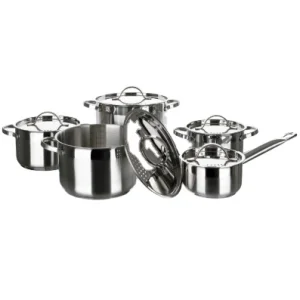
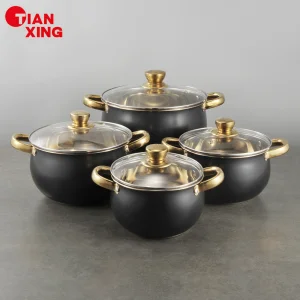
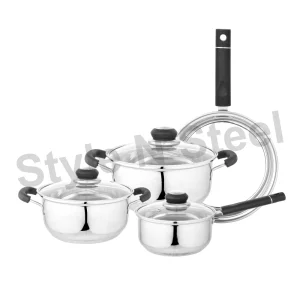
In the hyper-competitive global kitchenware market, volume buyers, corporate hospitality groups, and consumer brands demand more than just standard manufacturing. They require a manufacturing partner capable of aligning technical precision with regulatory compliance. Foshan Sarap Kitchen Co., Ltd., established in 2011, has risen as an industry-leading OEM/ODM manufacturer in Foshan, Guangdong Province—China’s premier kitchenware manufacturing cluster. Operating a state-of-the-art facility spanning over 22,000 square meters and employing a highly skilled workforce of over 250 professionals, Sarap Kitchen integrates advanced metallurgy with computerized processing lines to deliver premium cookware globally.
Modern B2B buyers must navigate complex macro environmental factors, including rising material costs, changing tariff structures, and tightening consumer safety standards. To achieve a sustainable competitive edge, sourcers must transition from simple transaction-based procurement to deep vertical partnerships. This whitepaper analyzes the manufacturing technicalities, supply chain compliance, design innovations, and operational capabilities that define the top tier of Chinese kitchenware exporting today.
The performance of professional-grade stainless steel kitchenware relies on metallurgical composition and structured thermal profiling. Not all stainless steels are engineered equally. At Sarap Kitchen, we apply rigorous material selection rules designed to maximize durability, thermal distribution, and corrosion resistance:
| Material Configuration | Common Applications | Key Performance Metrics | Compliance Approvals |
|---|---|---|---|
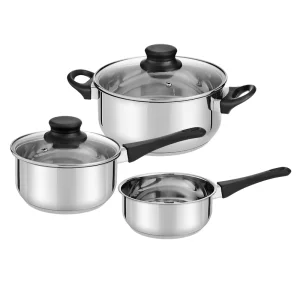
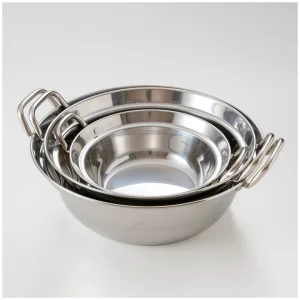
| Single-Ply SUS 304 | Hotel pans (GN Pans), mixing bowls, standard steamers | Extremely high structural rigidity, rustproof, light-weight | FDA, LFGB, GB 4806 |
| Tri-Ply Clad (304 + Alu + 430) | Premium saucepans, frying pans, saute pans | Optimized uniform heat flow, instant thermal response | EU Regulation, LFGB |
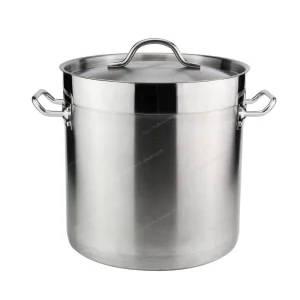
| Impact-Bonded Capsuled Base | High-capacity stock pots, commercial soup pots | Affordable heavy-duty cooking, thermal retention at base | FDA, NSF Compatible |
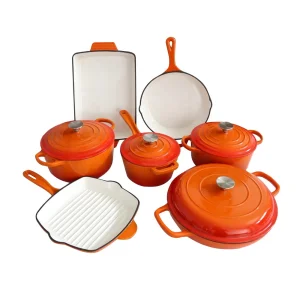
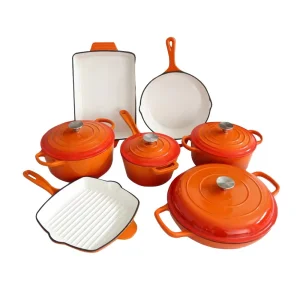
| Cast Iron with Enamel/Ceramic | Dutch ovens, specialty casserole pots | High heat capacity, non-reactive interior, modern design | FDA, California Prop 65 |
B2B buyers, importing agents, and retail procurement managers face unique operational challenges when dealing with high-volume manufacturing. Typical bottlenecks include lack of flexibility in OEM customization, inconsistent quality across production batches, and long transit cycles. Foshan Sarap Kitchen Co., Ltd. resolves these challenges through structured product engineering:
We transform concepts into physical products. With modular tooling, buyers can choose custom handle styles (gold-plated, silicone-molded, hollow anti-scald), custom glass lid profiles, and precision laser etching of corporate branding.
Every batch of stainless steel coil is subjected to spectroscopic validation before stamping. Finished pots undergo hydrostatic leak testing, handle tensile pull tests, and salt-spray testing to ensure decades of commercial use without weld failure.
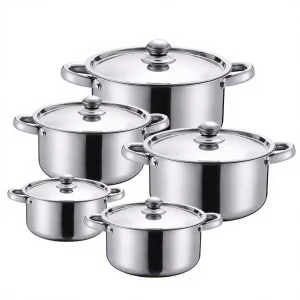
Our packaging design is engineered for maximum space utilization. By developing nested cookware configurations and custom inner boxes, we optimize container loading density, reducing international freight costs per unit by up to 18%.
As commercial and residential kitchens evolve toward digitalization, cookware manufacturing must adapt. The integration of induction heating, clean energy policies, and kitchen efficiency metrics drives our research and development programs. Below is our technology implementation pathway for the next five years:
Transitioning our manual metal polishing lines to robotic multi-axis polishing systems. This ensures a uniform satin finish across the entire surface of the pot and reduces micro-fissures where bacteria could hide, enhancing hygienic safety in industrial catering.
Developing molecularly fused multi-layer bases to prevent base warping under rapid, high-temperature thermal cycling. This enhances energy efficiency on commercial variable-frequency induction hobs by over 12% compared to standard impact-bonded disks.
Transitioning toward closed-loop cooling water recycling in our Foshan plant and utilizing recycled premium stainless steel scrap. Aligning our manufacturing processes with the EU's Carbon Border Adjustment Mechanism (CBAM) for friction-free imports.
For enterprise brands, a product recall due to heavy metal leaching is a major business risk. Our Quality Assurance protocol is designed to guarantee compliance with global import regulations. We work closely with third-party testing organizations (SGS, TUV, Intertek) to ensure that our stainless steel kitchen utensils comply with safety standards worldwide.
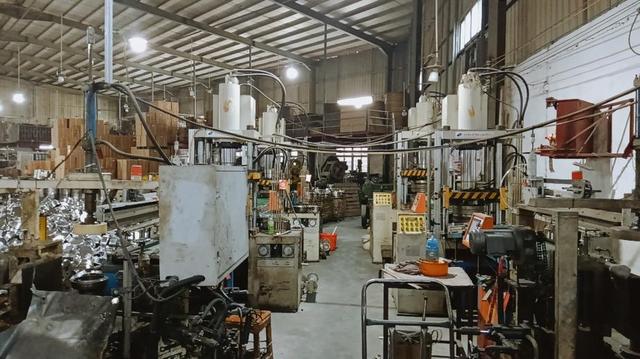
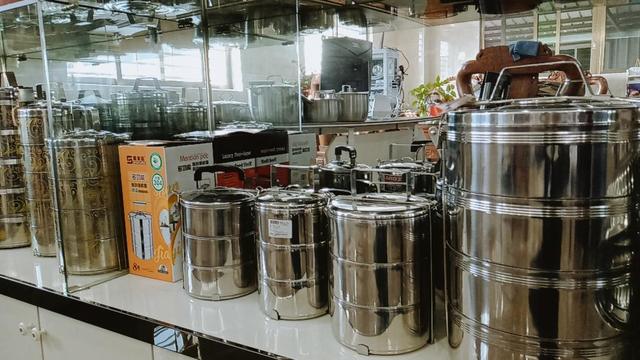
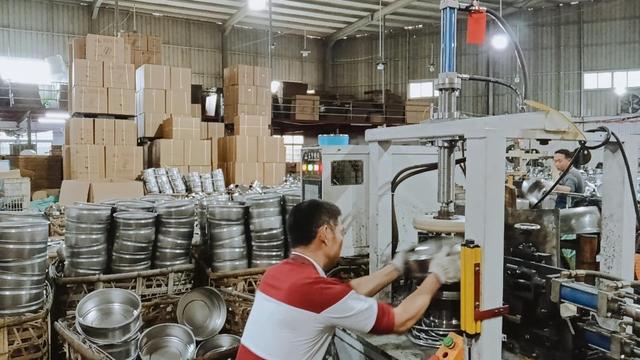
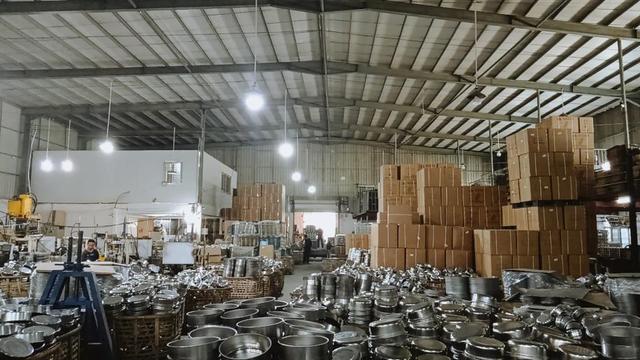
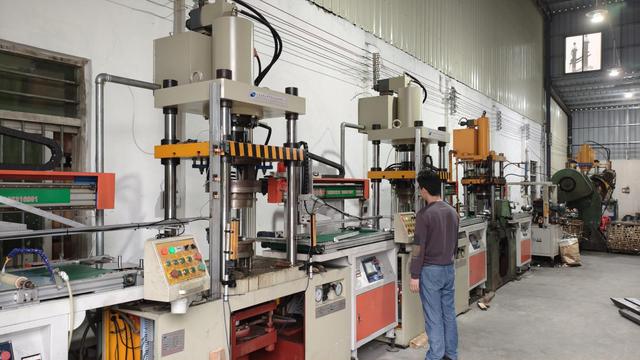
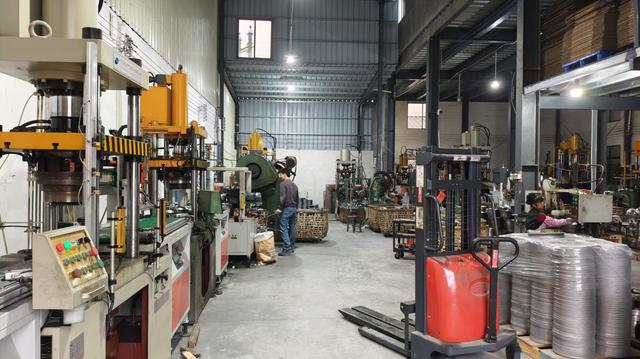
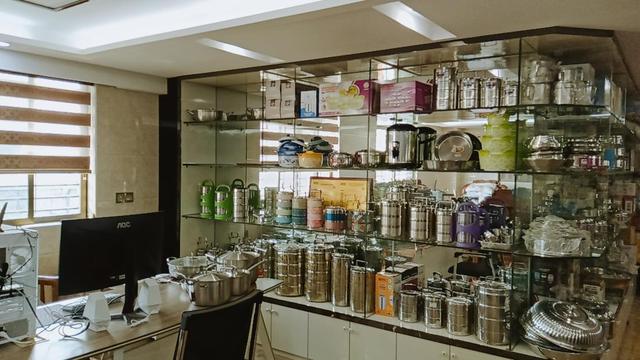
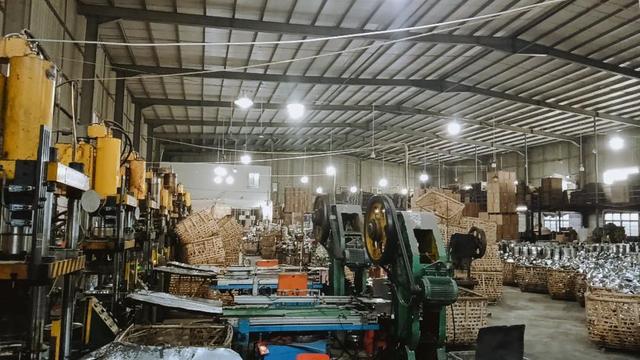
Take a visual tour of our 22,000 square meter factory, advanced production machinery, and comprehensive cookware showroom in Guangdong, China.
For commercial cookware, Grade 304 (18/10 stainless steel) is highly recommended for food-contact surfaces due to its high resistance to acids and rust. For induction compatibility, the base of the cookware must include a magnetic grade, such as Grade 430 stainless steel.
Impact-bonded cookware features an aluminum disk encapsulated within a steel base at the bottom of the pot. Multi-ply clad cookware consists of continuous layers of aluminum and stainless steel extending from the base up through the side walls, providing more even heat distribution and temperature control.
Our engineering team uses 3D modeling and CAD software to design custom cookware. We can produce rapid physical prototypes using custom tooling for handles, lids, and custom steel shapes, ensuring specifications are verified before beginning high-volume production.
Our products comply with major global standards, including FDA, LFGB, CE, and GB 4806. We operate under an ISO 9001:2015 certified quality management system, and our production facilities are BSCI-audited for social compliance.
Our standard Minimum Order Quantity (MOQ) ranges from 500 to 1,000 sets depending on the customization level. Mass production lead times typically range from 35 to 45 days after deposit confirmation and sample approval.