In the high-throughput global confectionery manufacturing industry, the evolution of molding technology has reached a pivotal junction. Historically, polycarbonate and silicone molds dominated small-scale and artisanal chocolate shops due to their lower initial tooling costs and ease of manual de-molding. However, in modern, fully automated industrial chocolate production lines, stainless steel chocolate molds (fabricated from premium 304 and 316-grade alloys) have emerged as the gold standard. This transition is driven by demanding requirements for structural stability under temperature variation, stringent global food safety mandates, and the sheer economics of plant operational efficiency.
Unlike polymers, which suffer from thermal fatigue, micro-cracking, and chemical degradation from sanitization cycles, industrial-grade stainless steel offers unmatched material longevity. High-volume factories operating 24/7 utilize deposit-and-cool automated systems where molds must endure rapid thermal transitions—from heated chocolate depositor temperatures (~30°C to 45°C) down to cooling tunnel environments (~4°C to 10°C) and back. Stainless steel's precise thermal conductivity guarantees a uniform cooling rate, preventing fat bloom, optimizing crystallization, and ensuring that the final chocolate product displays a glossy, premium finish with that signature crisp snap.
Information Gain Insight: The integration of magnetic steel alloys in modern demolding systems allows high-speed robotic pick-and-place systems to handle molds without mechanical friction. This drastically reduces particulate wear, completely eliminating the risk of micro-plastics entering the food chain.
100% inert material. Does not leach chemical compounds, heavy metals, or plastics into fats and sugars. Resists aggressive clean-in-place (CIP) chemicals.
Optimized thermal coefficient allows faster cooling cycles and controlled cocoa butter crystallization, preventing temper instability.
Engineered to withstand mechanical impact, pneumatic scrapers, and automated vibrations without losing dimensional tolerance.
As an expert OEM/ODM supplier, the manufacturing process of custom chocolate molds involves rigorous phases of co-engineering, material science, and high-precision fabrication. A client's concept must transition from CAD drawings to fully functional, high-output industrial tooling that aligns seamlessly with modern depositing machines. Below is the technical roadmap we deploy for every custom enterprise project:
The process begins with advanced CAD modeling. Standard chocolate viscosity behaves as a non-Newtonian fluid. Therefore, our design phase integrates computational fluid dynamics (CFD) to analyze the flow of tempered chocolate into the mold cavities. We calculate draft angles (ideally between 1.5° to 3.5°) to facilitate clean demolding and prevent air pocket entrapment.
Depending on the chocolate formulation (e.g., highly acidic dark chocolate, high-sugar white chocolate, or inclusions like nuts and sea salt), we select the appropriate alloy. We utilize premium-grade SUS304 for standard applications and SUS316/316L for recipes requiring superior corrosion resistance against active chloride ions and aggressive sanitation protocols.
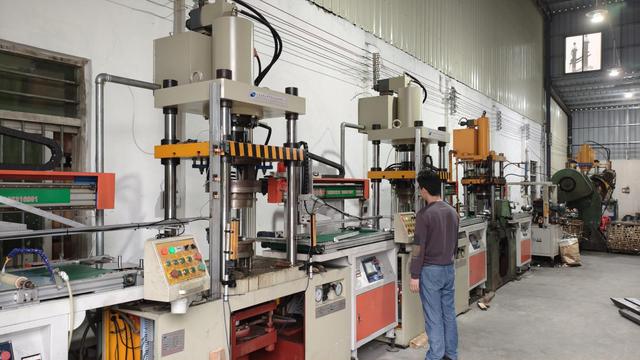
High-performance multi-axis CNC milling centers carve out the individual mold cavities. For intricate designs, micro-milling handles details down to 0.05mm. The tolerance of the mold plates is held within ±0.02mm, ensuring consistent chocolate weight across all deposit cycles, which is critical for packaging lines and portion control.
To achieve the desired gloss on the finished chocolate, the mold cavity surfaces must have a Ra (Roughness Average) value of less than 0.2 μm. This is accomplished using manual mirror polishing paired with advanced electro-polishing. Electro-polishing removes microscopic peaks, eliminating microscopic crevices where bacteria could build up.
| Specification / Parameter | Standard Grade (SUS304) | Premium Industrial Grade (SUS316) | Ultra-Low Carbon Grade (SUS316L) |
|---|---|---|---|
| Primary Application | General confectionery, hollow figurines, bars | Highly acidic recipes, continuous CIP operations | Corrosive environments, extreme heat sanitation |
| Surface Roughness (Ra) | ≤ 0.4 μm (Mirror polished) | ≤ 0.2 μm (Electro-polished) | ≤ 0.15 μm (Advanced chemical passivation) |
| Corrosion Resistance | High (Standard food-safe) | Excellent (Pitting resistant) | Maximum (Intergranular corrosion proof) |
| Dimensional Tolerance | ± 0.05 mm | ± 0.02 mm | ± 0.01 mm |
In modern chocolate processing facilities, the mold is not an isolated component; it is the central interface of an extensive, synchronized system. Our ODM/OEM services focus heavily on ensuring that all stainless steel molds are fully compatible with high-speed automated depositor and cooling lines. This includes precise integration with systems developed by industry leaders like Buhler, Aasted, and Sollich.
One of the major breakthroughs in industrial chocolate production is the implementation of multi-layered composite molds. By combining a stainless steel product cavity contact surface with a magnetic backing frame, factories can leverage high-speed electromagnetic demolding systems. This permits the production line to operate at rates exceeding 30 mold drops per minute without risking damage to intricate chocolate geometries. Furthermore, the high structural strength of stainless steel permits a thinner mold wall, which translates to a lower thermal mass. This engineering innovation cuts cooling times by up to 15%, reducing energy consumption within industrial cooling tunnels.
Why Advanced Confectioners Choose Our Custom Engineering Solutions:
We provide comprehensive design calculations including FEM (Finite Element Method) analysis to predict the fatigue life of molds subjected to mechanical vibration de-molding. This ensures that every tool delivered maintains structural integrity over millions of deposit cycles.
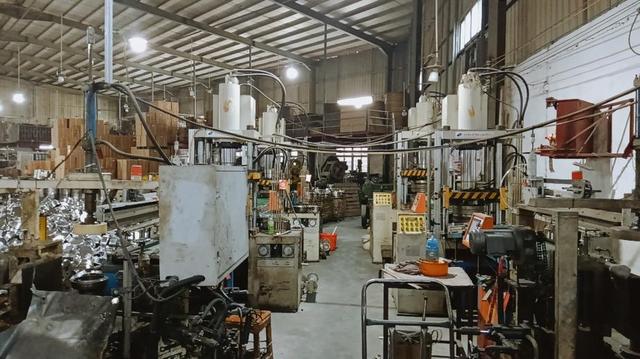
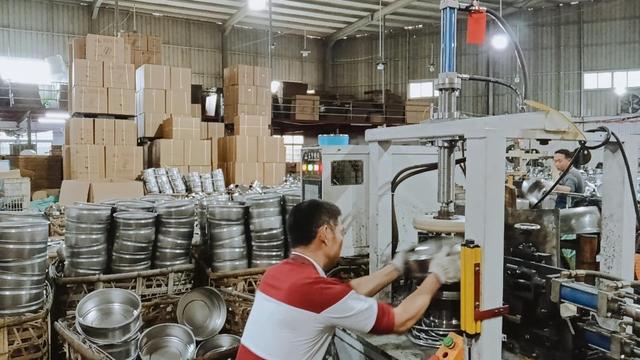
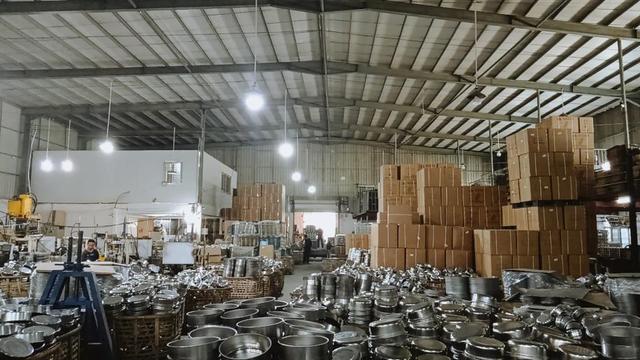
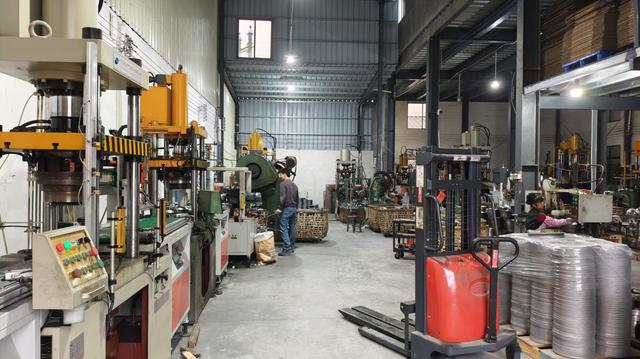
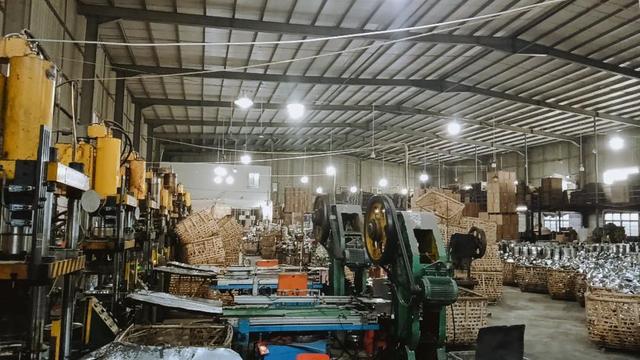
Foshan Sarap Kitchen Co., Ltd. is a professional manufacturer specializing in stainless steel cookware and kitchenware solutions for residential, commercial, and professional culinary applications worldwide. Established in 2011, the company is located in Foshan, Guangdong Province, one of China's leading manufacturing hubs for kitchenware and household products. With a production facility covering over 22,000 square meters and a workforce of more than 250 employees, Sarap Kitchen has developed comprehensive capabilities in cookware design, manufacturing, quality control, and international export services.
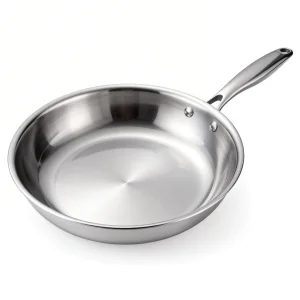
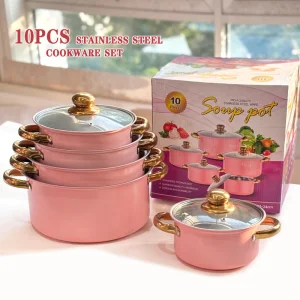
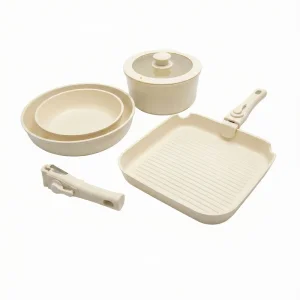
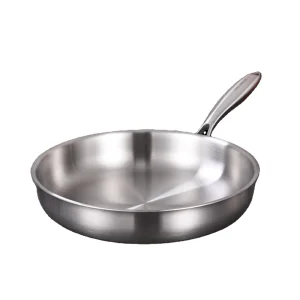
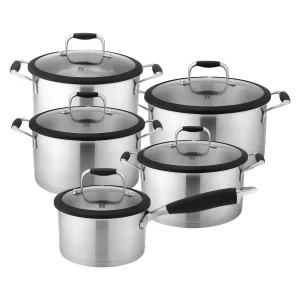
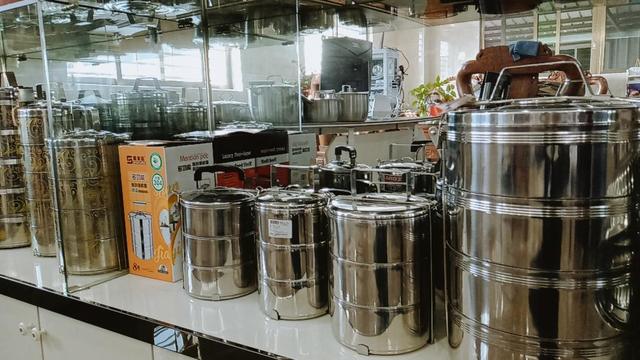
The company focuses on the production of stainless steel frying pans, saucepans, stock pots, sauté pans, casserole pots, steamers, cookware sets, and customized kitchenware products. Utilizing advanced manufacturing equipment, automated polishing lines, precision forming technologies, and strict quality management procedures, Sarap Kitchen delivers cookware solutions designed for durability, heat distribution efficiency, and long-term performance.
Serving distributors, retailers, hospitality groups, cookware brands, and foodservice equipment suppliers, Sarap Kitchen offers flexible OEM and ODM manufacturing services. Customers can customize product specifications, materials, surface finishes, handles, packaging, branding, and private-label requirements to meet diverse market demands.
Innovation and product development remain central to the company's growth strategy. Its engineering team continuously explores improvements in multi-ply construction, induction-compatible designs, ergonomic features, and sustainable manufacturing practices. Every product undergoes rigorous inspection throughout the production process to ensure consistency and compliance with international quality standards.
Today, Foshan Sarap Kitchen Co., Ltd. exports to North America, Europe, the Middle East, Southeast Asia, South America, and other global markets. Through reliable manufacturing capabilities, customer-oriented service, and continuous product innovation, the company supports partners seeking high-quality stainless steel cookware solutions for both household and commercial kitchens.

Confectionery production standards vary significantly across global geographic zones, requiring a customizable engineering approach to meet regional regulatory frameworks:
In the United States and Canada, custom stainless steel molds must fully comply with FDA CFR Title 21 food contact regulations and NSF/ANSI 51 criteria for materials used in commercial food equipment. High-throughput chocolate factories in the Midwest and Pacific Coast regions emphasize heavy-gauge SUS304 construction to handle high mechanical stresses from heavy depositing heads.
The European market, particularly in countries with rich chocolate-making heritages like Belgium, Switzerland, and Germany, demands exceptionally high precision and strict chemical limits. European regulation EC 1935/2004 dictates that materials must not release substances into food in quantities that endanger human health. Molds built for European markets undergo thorough heavy-metal migration tests, which is why SUS316L is frequently requested for premium formulations.
In tropical regions, controlling ambient moisture on mold surfaces is critical to preventing condensation and chocolate bloom. We provide specialized thermal and surface treatments designed to operate efficiently in manufacturing plants situated in high-humidity climates.
Q1: Why is 316-grade stainless steel preferred over 304 for specialized chocolate formulations?
316-grade stainless steel contains 2-3% Molybdenum, which increases its resistance to chloride-induced corrosion and pitting. Some chocolate fillings contain salt, fruit acids (citric acid in berry-flavored fillings), or dairy components that can cause micro-corrosion on 304 steel over years of continuous exposure. For clean-in-place (CIP) operations using strong sanitizers, 316 provides the maximum safety threshold.
Q2: How does surface roughness (Ra) impact the chocolate release process?
Surface roughness dictates demolding efficiency and final product sheen. If the surface is rough (high Ra), chocolate particles stick inside microscopic valleys, resulting in product tearing and residues that trigger contamination. By maintaining a Ra of less than 0.2 μm through electro-polishing, the chocolate slides out easily during mechanical tapping, leaving a flawless, reflective finish on the chocolate.
Q3: Can stainless steel molds handle fillings and complex multi-layered chocolate products?
Absolutely. Through our ODM services, we design specialized multi-part or interlocking molds with precise tolerances to support shell forming, filling injection, and backing processes. Our computational flow modeling ensures that the outer shell maintains an even thickness, preventing leaks or cracks when warm fillings are introduced.
Q4: What is the typical lead time for custom OEM/ODM mold design and manufacturing?
A standard project takes 4 to 6 weeks. The initial CAD design and CFD analysis require 1 week, followed by rapid 3D prototyping for physical verification. Once the design is approved by the client, CNC milling, electro-polishing, and passivation processes take approximately 3 to 4 weeks, depending on the volume of cavity plates requested.
Q5: How do you ensure dimensional consistency across high-volume production batches?
We utilize high-speed multi-axis CNC machines calibrated weekly to ensure zero drift. Post-fabrication, every single mold is measured with Coordinate Measuring Machines (CMM) to verify that dimensional variations remain within the ±0.02mm range. This degree of accuracy prevents weight variance issues at packaging.
Q6: Are your stainless steel molds compatible with pneumatic and magnetic demolding lines?
Yes. We engineer customized mounting frames, slots, and magnetic backing options to match any system specification. Whether your line uses mechanical knockers, vacuum cups, or magnetic grippers, we modify the mold parameters to integrate seamlessly into your setup.
Q7: What sanitation methods are recommended for stainless steel industrial molds?
We recommend clean-in-place (CIP) loops utilizing alkaline detergents followed by hot water rinsing and sanitizers. Unlike polycarbonate, which is vulnerable to stress-cracking when exposed to high temperatures and alkaline agents, stainless steel can withstand pressurized steam sterilization (up to 121°C) and strong cleaning solvents without degradation.