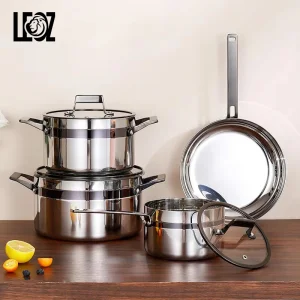
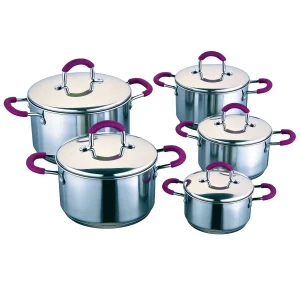
Engineered to meet the rigorous thermal requirements and mechanical demands of South Sudan's commercial and domestic culinary environments, our top-tier stainless steel sets deliver optimized heat retention and wear resistance.
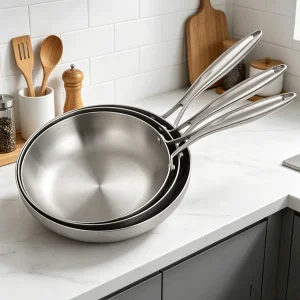
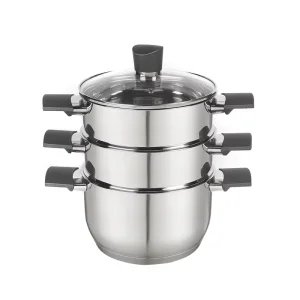
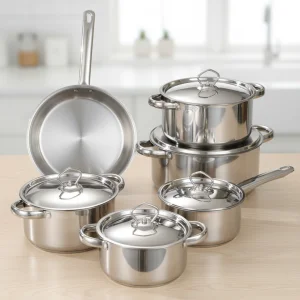
As East Africa’s youngest nation undertakes infrastructure rehabilitation and urban migration accelerates in major centers like Juba, Wau, Malakal, and Yei, the commercial hospitality sector and retail market are experiencing a paradigm shift. B2B procurement professionals, non-governmental organizations (NGOs) managing food programs, and private developers are upgrading food-service setups from fragile, low-grade aluminum pots to robust, food-grade stainless steel cookware.
This transition is driven by critical health regulations, longevity requirements, and economic calculations. Traditional aluminum cookware poses chemical leaching risks, particularly when cooking highly acidic indigenous foods. Modern distributors in South Sudan are prioritizing premium stainless steel configurations (SUS304 and SUS316) that provide inert, non-reactive cooking surfaces and superior resistance to mechanical wear.
Moreover, the modernization of energy infrastructure in South Sudan's commercial zones has increased the demand for multi-stove compatible cookware. Products must perform reliably across gas burners, electric hotplates, and high-output charcoal stoves, making tri-ply capsule induction bases a structural necessity rather than a luxury.
Containing 18% Chromium and 8% Nickel, this alloy offers high corrosion resistance and structural integrity under high temperatures, ensuring no metallic migration into food.
An impact-bonded aluminum core sandwiched between protective stainless steel layers eliminates hot spots, providing even heat distribution on gas, induction, or charcoal.
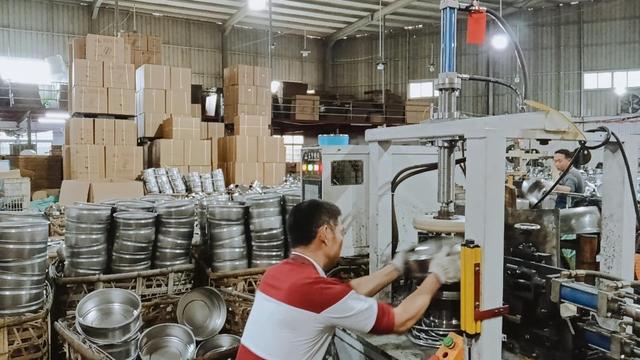
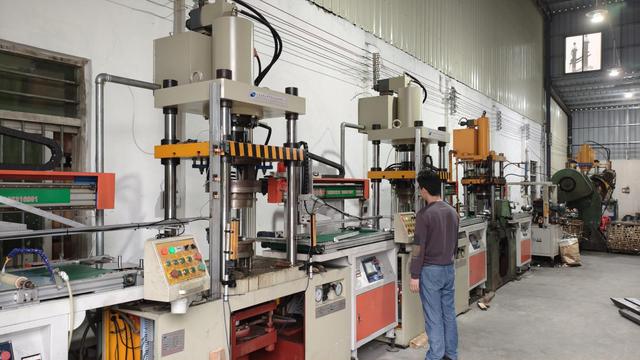
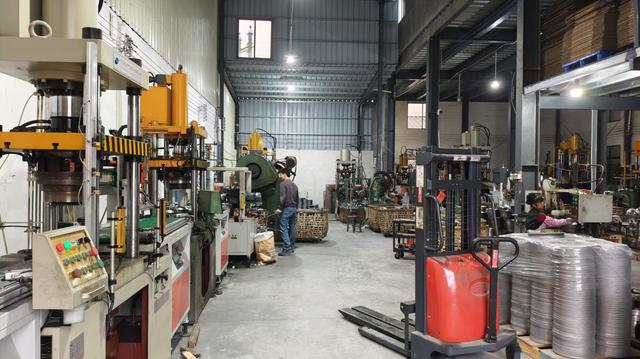
Manufactured using heavy-duty hydraulic pressing processes, ensuring uniform wall thickness and eliminating weak points that could fail under thermal stress.
Cooking in South Sudan often involves preparation over open flames, charcoal stoves, and high-capacity gas burners. This requires specialized design choices:
Standard thin pots buckle under localized intense heat from charcoal or open fire. Our factory uses minimum 3.0mm composite bases to prevent deformation, maintaining a flat profile that facilitates heat transfer throughout decades of intensive use.
To safely handle large volumes of boiling soups and traditional stews, handles are secured with high-tensile multi-spot welds and stainless steel rivets, providing reliable structural safety for industrial kitchens.
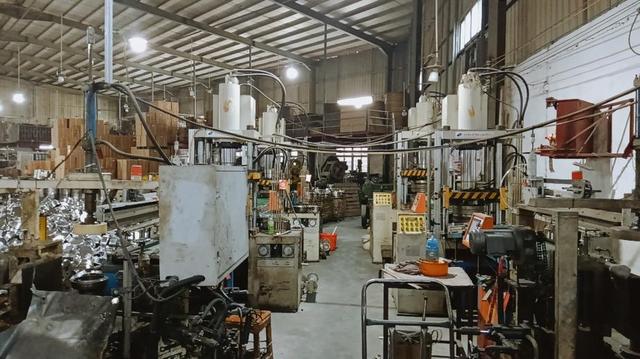
Foshan Sarap Kitchen Co., Ltd. is a specialized manufacturer of stainless steel cookware and kitchenware solutions for residential, commercial, and professional culinary applications worldwide. Established in 2011, the company is located in Foshan, Guangdong Province, one of China's leading manufacturing hubs for kitchenware and household products.
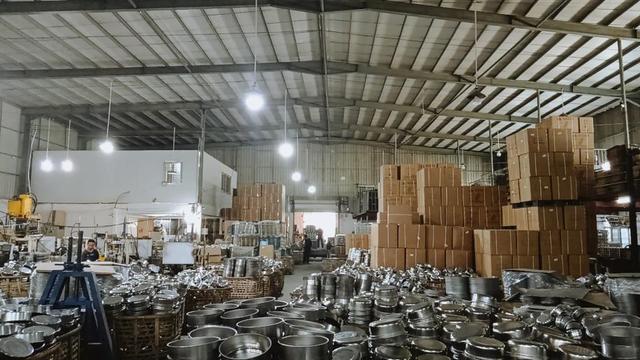
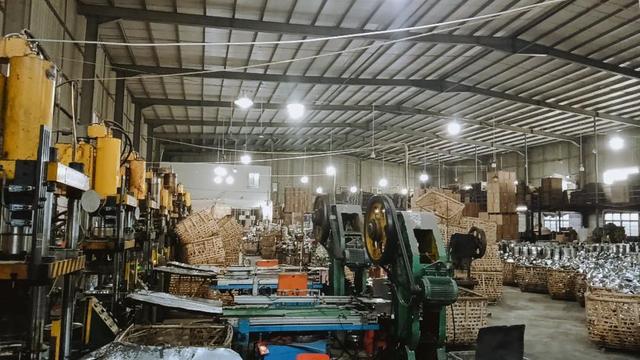
Spanning a production facility of over 22,000 square meters and powered by a workforce of more than 250 skilled employees, Sarap Kitchen integrates advanced manufacturing equipment, automated polishing lines, precision forming technologies, and strict quality management procedures to deliver highly durable cookware solutions.
By utilizing Industry 4.0 automated stamping lines, high-frequency brazing machines for impact bonding, and robotic surface polishing, we achieve high batch consistency while keeping costs optimized for international B2B importers.
Contact Factory EngineersTake a virtual tour inside our manufacturing lines where raw stainless steel coils are shaped, polished, tested, and packed for global export.
Shipping heavy industrial kitchenware to South Sudan requires robust logistics routes. Over years of servicing East African importers, Foshan Sarap Kitchen has developed structured supply chain solutions utilizing major transport corridors:
Goods ship from Shenzhen/Guangzhou ports to Mombasa Port in Kenya, followed by transit via Nairobi, Malaba border, Kampala, and the Nimule border post directly to Juba. Ideal for standard B2B sea freight.
Shipping to Port Sudan, with rail and road transit southward. Recommended for large commercial bids targeting Northern states and UN/NGO warehouses in border zones.
For urgent high-end hospitality projects or hotel launches in Juba, air cargo routes via Nairobi (NBO) or Addis Ababa (ADD) directly to Juba International Airport (JUB) ensure fast transit.
We support customized laser logo engraving, custom packaging designs, material configurations (e.g., opting for thicker aluminum cores), and private-label packaging to help importers establish strong brand identities in East Africa.
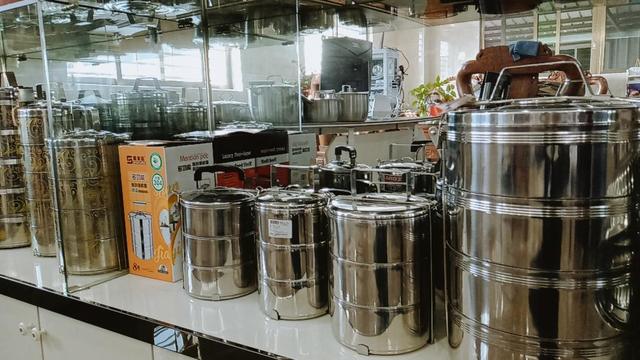
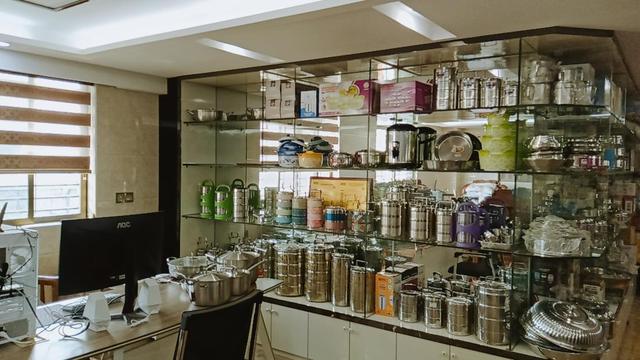
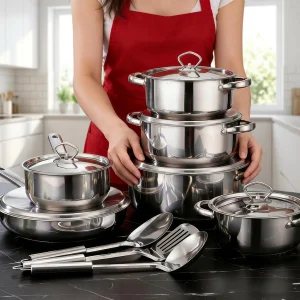
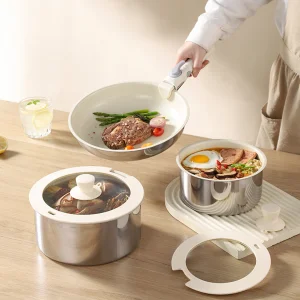
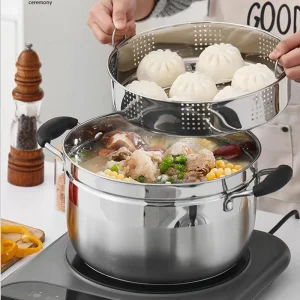
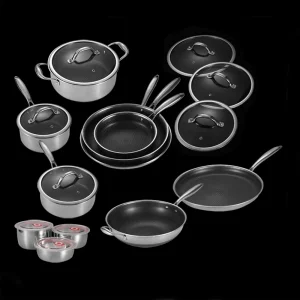
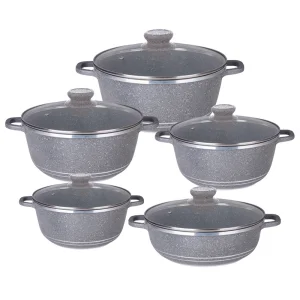
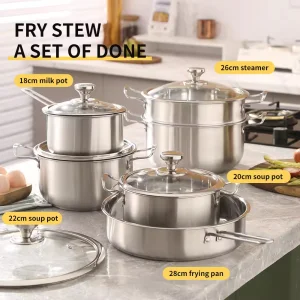
A comprehensive range of custom designs, including multi-tier steamers, multi-ply frying pans, and commercial-capacity stock pots configured for retail and hospitality distribution.

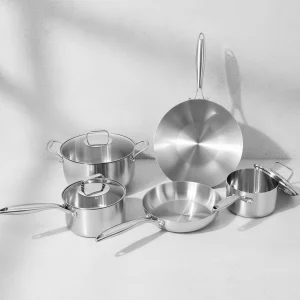
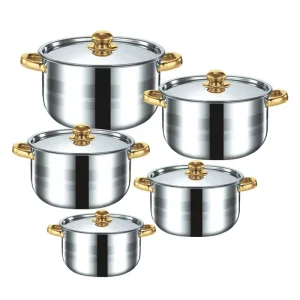
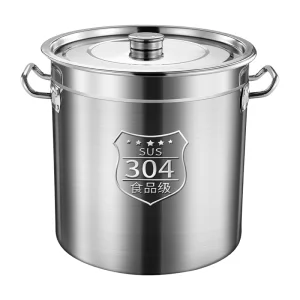
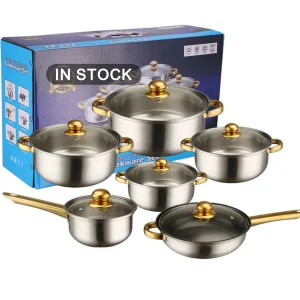
Our standard factory MOQ starts at 500 sets for custom OEM branding. However, for specialized commercial culinary projects, institutional tenders, or regional distributors setting up distribution channels in Juba, we can offer flexible MOQ structures depending on capacity requirements and product category.
We utilize verified SUS 304 (18/8) and SUS 316 (18/10) food-grade raw materials. Each batch undergoes spectral analysis to verify chromium, nickel, and carbon ratios. All products conform to FDA, LFGB, and European Standard (EN 12983-1) certifications, ensuring they are free from heavy-metal leaching even under high-acid cooking conditions.
Yes, our cookware sets feature encapsulated impact-bonded bases with a core of high-purity aluminum. This design ensures fast heat conduction and uniform heat distribution, protecting the pot bottom from deformation caused by concentrated heat from charcoal or open flames.
We use high-toughness tempered glass with thick stainless steel protective rims to absorb physical vibrations during shipping. For markets with challenging road conditions like the Nimule-Juba highway, we recommend our solid stainless steel lids for increased durability.
We offer comprehensive private-label ODM/OEM services. This includes permanent laser logo branding on pot bottoms and handles, customized retail color boxes, and heavy-duty 5-layer corrugated master cartons designed for long-distance transport.
Our manufacturing lead time ranges from 30 to 45 days after deposit confirmation, depending on volume. Shipping from Shenzhen/Guangzhou ports to Mombasa Port typically takes 20 to 25 days, and overland customs clearance from Kenya via Uganda to Juba takes an additional 10 to 15 days.
Yes, Foshan Sarap Kitchen Co., Ltd. is BSCI-certified. Our production lines operate under strict ethical guidelines, ensuring fair labor standards, safe factory floor environments, and environmental management practices.
We provide standard commercial export documentation, including Certificates of Origin (CO), detailed packing lists, and commercial invoices. We also cooperate with international inspection bodies (such as SGS or Intertek) to issue Pre-Export Verification of Conformity (PVoC) certificates required for import clearance in the EAC region.
Gain competitive supply advantages with a leading Foshan kitchenware manufacturer. We offer optimized pricing, customizable technical specifications, and end-to-end logistics solutions for the South Sudan market.
Send Inquiry Now