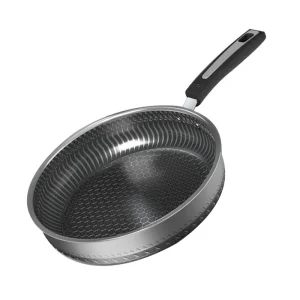
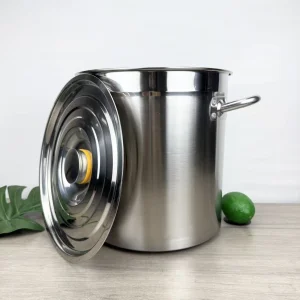
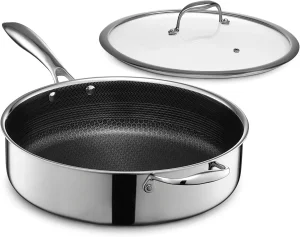
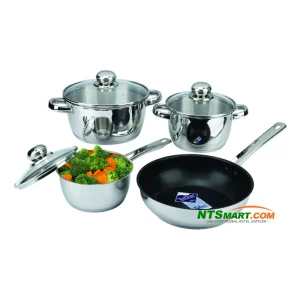
Heavy-duty commercial designs optimized for professional kitchens and residential private labels
Founded in 2011, Foshan Sarap Kitchen Co., Ltd. has established itself as an elite, global manufacturer specializing in high-performance stainless steel cookware, baking grids, roasting racks, and comprehensive kitchenware solutions. Located strategically in Foshan, Guangdong Province—the epicenter of China's advanced hardware and industrial manufacturing—we bridge the gap between premium raw metallurgy and consumer-ready culinary gear.
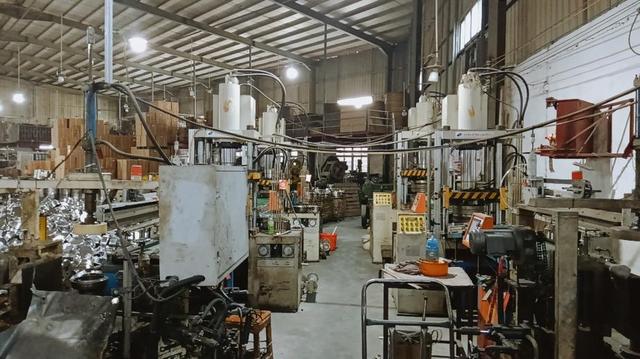
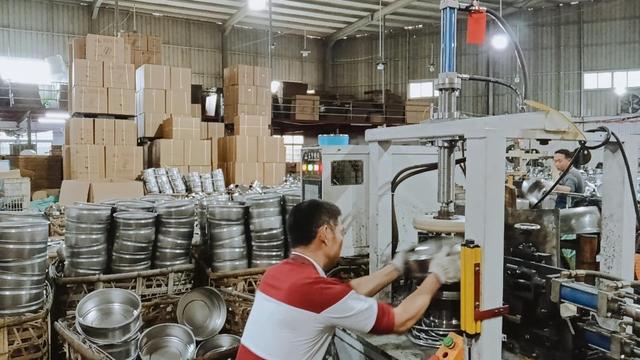
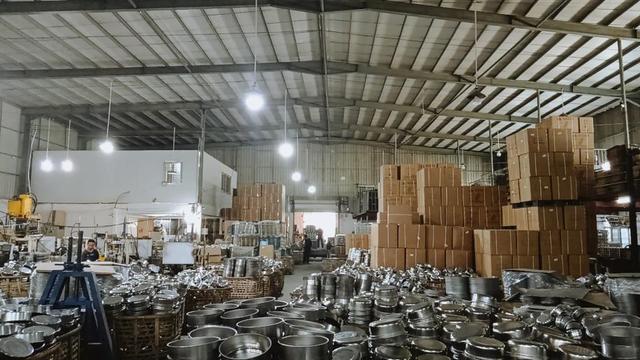
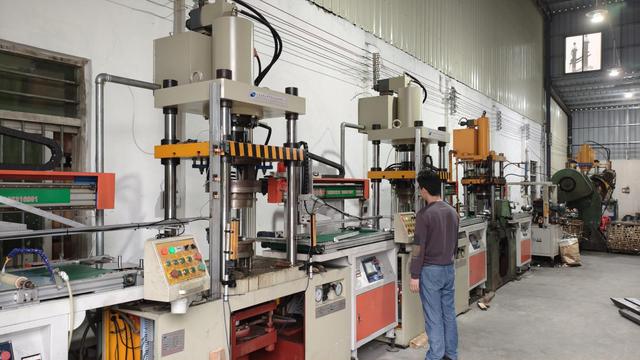
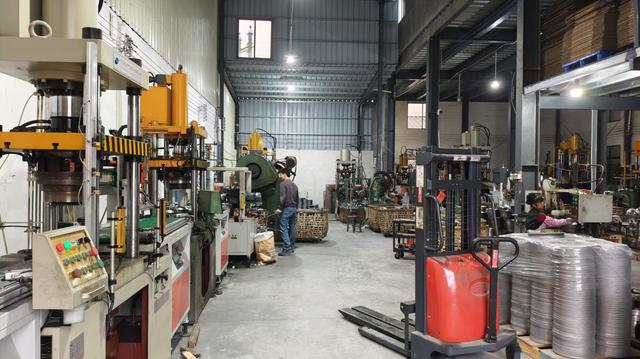
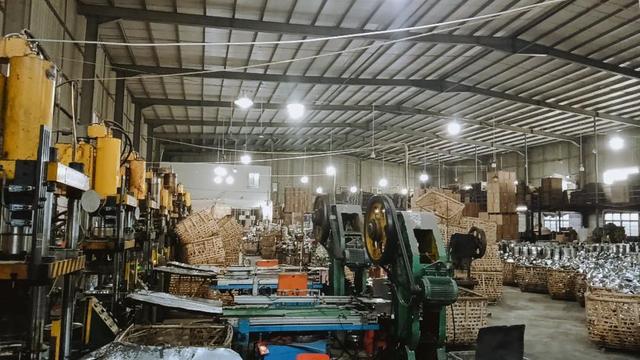
Our operation encompasses a sprawling, state-of-the-art production facility spanning more than 22,000 square meters. Fueled by a dedicated, highly trained workforce of over 250 industry specialists, Sarap Kitchen integrates product design, testing, deep-drawing, stamping, automated assembly, electro-polishing, and logistics under one unified quality management framework.
We pride ourselves on serving as the primary manufacturing backbone for international distributors, premium retail chains, hospitality procurement groups, and private label brands seeking long-term performance and strict environmental compliance. Our capacity to execute highly tailored OEM and ODM orders allows clients to fine-tune material compositions (e.g., 304, 316, or tri-ply composite metals), custom dimensions, heavy-duty wire gauges, handle configurations, and global-ready retail packaging.
The shift toward high-durability, food-grade materials and structural optimization in commercial culinary design
The global culinary industry is experiencing a profound transition toward sustainable, non-toxic, and heavy-duty cooking substrates. Stainless steel roasting racks, once regarded as secondary kitchen accessories, have emerged as primary components in modern high-heat convection cooking, commercial combi-ovens, and industrial smoking applications. This change is driven by shifting consumer preferences and strict regulatory updates regarding food-contact surfaces.
Over the last decade, regulatory investigations by authorities such as the FDA, EFSA, and China's State Administration for Market Regulation (SAMR) have placed fluorinated coatings (such as PTFE and PFOA) under scrutiny. Consumer awareness regarding the thermal degradation of non-stick chemical layers has escalated. In response, global brands are prioritizing food-grade SUS304 (18/8) and SUS316 (18/10) stainless steel. Unlike coated carbon steel, premium stainless steel is naturally non-reactive, corrosion-resistant, and free from synthetic polymer coatings. It operates safely at temperatures exceeding 900°F (482°C) without the risk of toxic outgassing or chemical leaching.
Modern culinary engineering leverages fluid dynamics to optimize baking and roasting efficiency. Modern stainless steel roasting racks are built to maximize convective airflow beneath the food product. Elevating the roast by even 1.5 to 2 inches creates a heat corridor that speeds up thermal transfer and promotes uniform cooking, eliminating the need to rotate large cuts of meat manually. The geometry of the wire layout—whether featuring a V-shaped profile, a curved U-shape, or flat cross-welded matrices—is engineered to handle fat drainage efficiently, reducing smoke and minimizing surface sticking.
In high-capacity hospitality environments, cooking equipment must withstand automated dishwasher cycles, sanitizing chemicals, and thermal shock. Stainless steel roasting racks constructed with thick, heavy-gauge perimeter frames (ranging from 5mm to 8mm in diameter) and robust cross-welds prevent warping under extreme temperature changes. This durability makes them ideal for modern high-output, automated industrial food lines.
Evaluating long-term replacement cycles demonstrates that investing in SUS304 yields a lower total cost of ownership (TCO) compared to chrome-plated carbon steel.
100% compliance with global food contact regulations (FDA, LFGB, REACH, RoHS). Ideal for global exporters navigating complex custom inspections.
Maintains structural integrity up to 900°F (482°C). Zero deformation, structural bowing, or micro-cracking at high heat loads.
Deciphering technical specifications, material selections, and quality verification standards for international buyers
For B2B procurement directors, brand owners, and sourcing agents in North America, Europe, and the Asia-Pacific region, selecting the right manufacturing partner in China is critical. While unit pricing remains a key factor, leading global buyers focus on manufacturing precision, metallurgical purity, and supply chain accountability. Understanding the technical specifications of stainless steel alloys is essential to ensuring long-term product performance.
| Alloy Designation | Composition (Cr-Ni-Mn) | Corrosion Resistance | Tensile Strength (MPa) | Recommended Applications | Cost Factor |
|---|---|---|---|---|---|
| SUS 316 (Marine Grade) | 18% Cr, 10% Ni, 2% Mo | Outstanding (Excellent in saline/acidic environments) | ≥ 515 | High-end professional foodservice, medical-grade cookware, marine use | Premium |
| SUS 304 (Standard Food Grade) | 18% Cr, 8% Ni, 0% Mo | Very High (Resistant to organic acids and moisture) | ≥ 505 | Commercial baking grids, roasting racks, domestic cookware, stock pots | Standard High-End |
| SUS 201 (Lower Nickel Grade) | 15% Cr, 1% Ni, 5.5% Mn | Moderate (Prone to rust under high humidity) | ≥ 520 | Budget residential kitchenware, dry storage components | Economical |
| Chrome-Plated Carbon Steel | Base Iron + Thin Cr plating | Low (Rusts quickly once the plated barrier is scratched) | Varies | Low-cost disposable or entry-level retail consumer goods | Budget-focused |
When audits are conducted at China-based roasting rack factories, several vital quality parameters must be verified to prevent field failures and expensive product recalls:
Every junction on a roasting rack is a potential point of failure. Low-quality spot-welding leaves microscopic voids that trap food debris and harbor bacteria, or cause wires to snap under load. High-quality manufacturers utilize automated multi-point resistance welding to ensure flat, slag-free, and uniform joints.
The surface finish on stainless steel is not just aesthetic. Electropolishing removes iron impurities from the surface, creating a chromium-rich oxide layer that maximizes corrosion resistance and creates a smooth, easy-to-clean surface.
Roasting racks must hold heavy turkeys, prime ribs, or hams without flexing. Supporting crossbars and reinforced corner feet distribute weight evenly across the perimeter frame, preventing deformation and keeping food stable during transport.
Reputable manufacturers provide Mill Test Certificates (MTC) for every batch of raw wire. Spectrometer analysis is performed on the factory floor to ensure that the chemical profile matches international standards for food-grade alloys.
How Foshan Sarap Kitchen Co., Ltd. addresses complex, custom specifications at scale
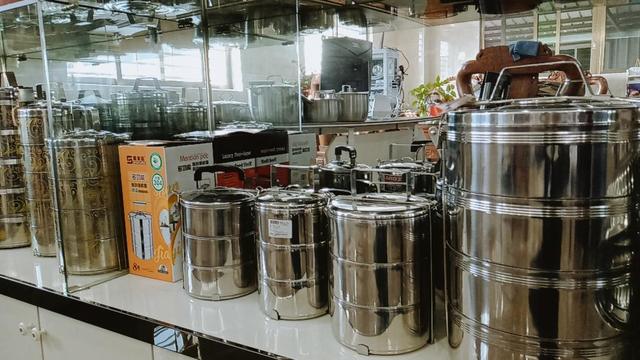
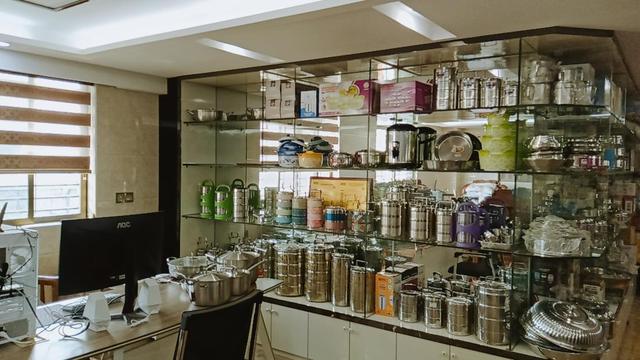
Operating out of our 22,000-square-meter facility in Foshan, Sarap Kitchen provides end-to-end support for custom stainless steel cookware development. We handle everything from the initial design phase to mass production and logistics, ensuring high quality and consistency throughout the manufacturing process.
Our engineering division translates CAD designs into functional prototypes in 7 to 10 working days. We utilize advanced CNC wire-forming machinery that bends steel wire with high precision. This ensures that every roasting rack profile matches the internal radius of the roasting pan, optimizing space and performance.
To produce consistent products, we utilize automated welding lines that maintain uniform heat across all joint locations. This reduces the heat-affected zone (HAZ), preventing localized corrosion and weak spots. These automated lines allow us to maintain high manufacturing standards across high-volume production runs.
Clients can choose from several specialized surface finishes:
Mitigating global trade risks through rigorous quality assurance and direct port logistics
Navigating the custom systems of Europe and the Americas requires strict adherence to regional food contact laws. Foshan Sarap Kitchen Co., Ltd. regularly updates our certifications to ensure seamless importation. Our stainless steel products undergo testing to verify compliance with FDA requirements for food-contact metals and LFGB standards for European markets.
In addition, our manufacturing facilities are regularly audited to ensure compliance with quality management standards. This process provides transparency and peace of mind for our B2B partners, protecting their brand reputation.
Foshan's location in Guangdong Province provides significant logistical benefits. Close to Guangzhou, Shenzhen, and Hong Kong, our facility offers easy access to major international shipping routes. We work with experienced logistics providers to handle customs documentation, export clearances, and freight consolidation, helping to optimize transit times and control shipping costs.
Innovative developments shaping the next generation of professional stainless steel kitchenware
Our engineering team works to identify and incorporate new developments in materials science and manufacturing. Over the next three to five years, we plan to focus on several key areas:
We are exploring hybrid material structures that pair lightweight, highly thermal-conductive core metals (such as pure aluminum) with durable outer layers of food-safe stainless steel. This combination can improve heat distribution while maintaining the durability of standard stainless steel.
In line with global environmental goals, we are incorporating more eco-friendly processes into our manufacturing. This includes transitioning to water-recycling electropolishing systems and using clean energy sources for our heavy machinery. These initiatives help lower the carbon footprint of our operations.
We are developing roasting systems designed to accommodate wireless temperature probes. By incorporating designated mounting points and keeping lines clear, we help users achieve precise internal temperature tracking during commercial roasting processes.
Expert technical answers to common B2B procurement and material questions
SUS304 contains 18% chromium and 8% nickel, which creates a natural, self-healing oxide layer that prevents rust and corrosion. Chrome-plated iron relies on a thin, applied coating that can scratch easily. Once that plating is damaged, the underlying iron is exposed to moisture and heat, leading to rust and food contamination issues in commercial kitchens.
For custom OEM designs, the tooling and prototyping phase usually takes 7 to 14 days. Once the prototype is approved, mass production takes between 30 and 45 days, depending on order volume and design complexity. Standard models in our catalog may have shorter lead times.
Yes, our ODM division specializing in customizing dimensions, wire spacing, height, and handle configurations. We can build racks to fit your existing pan sizes, helping to optimize airflow and ensuring a secure fit.
We perform chemical analysis on every incoming batch of raw wire using handheld X-ray fluorescence (XRF) spectrometers. We also check Mill Test Certificates (MTC) from our steel suppliers to ensure that the material meets the required chemical specifications for chromium and nickel before production begins.
Our roasting racks comply with major food-contact material regulations, including the US FDA standards for stainless steel alloys and European LFGB requirements. We conduct regular testing through independent laboratories like SGS, Intertek, and TUV to maintain these certifications.
High-performance cookware designed for commercial ranges, induction stations, and domestic kitchens