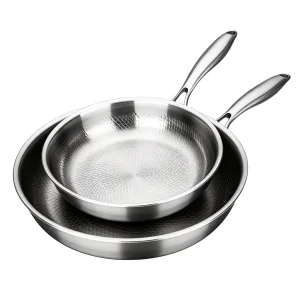
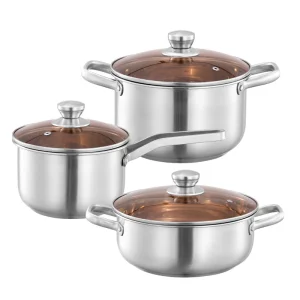
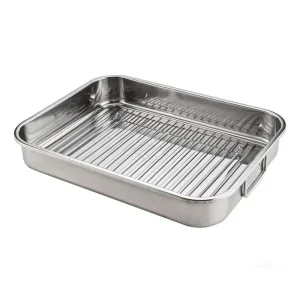
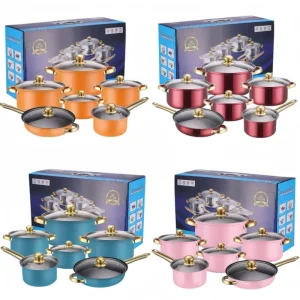
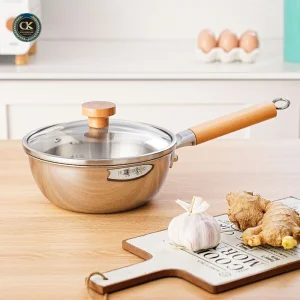
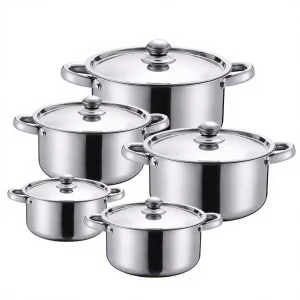
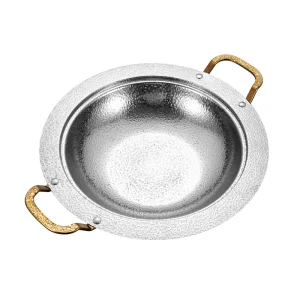
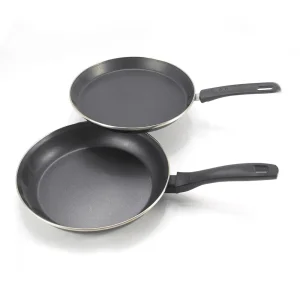
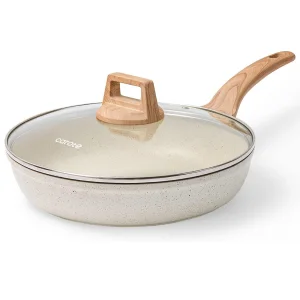
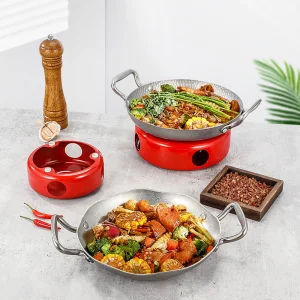
Explore our foundational range of premium commercial cookware, built to withstand the rigorous demands of hotel buffets, banqueting facilities, and heavy-duty kitchens.
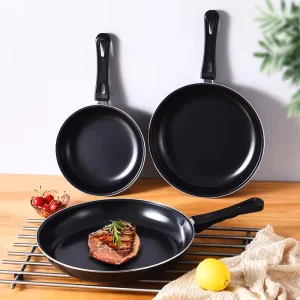
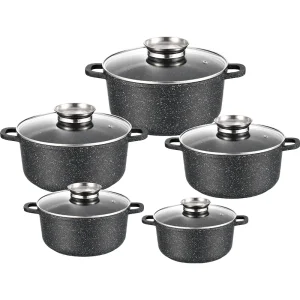
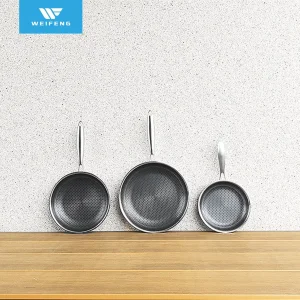
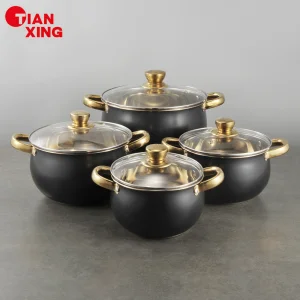
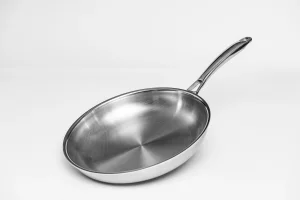
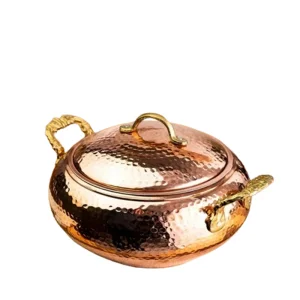
Analyzing key market dynamics, material innovations, and the global shifting demands for durable catering solutions.
The global commercial food warming industry has witnessed structural evolution, driven by the expansion of the hospitality sector, large-scale conference event hosting, and premium hotel buffets. Stainless steel chafing dishes (chafers) have evolved from functional water-bath heating elements into highly customized, aesthetically refined, and energy-efficient systems. Sourcing managers now focus heavily on longevity, ease of maintenance, heat-retention efficiency, and compliance with strict food contact standards (e.g., FDA, LFGB, and NSF).
With major market shifts toward automated buffet experiences, there is a rising demand for induction-compatible chafing dishes that eliminate the open flame hazards associated with traditional gel fuels. This transition requires metallurgical competence, as manufacturing facilities must fuse ferromagnetic bases with food-grade stainless steel layers to ensure seamless heat transfer.
"High-end commercial venues require equipment that delivers reliable heat conservation while matching the visual language of contemporary interior design. Material grade and hinge mechanism stability are the two major factors that define the durability of a commercial chafer."
A technical overview of the primary raw material alloys utilized in manufacturing high-end commercial chafing dishes.
| Alloy Grade | Chemical Composition | Corrosion Resistance | Thermal Properties | Ideal Application Scenario |
|---|---|---|---|---|
| SUS 304 (Food Grade) | 18% Cr, 8% Ni | Excellent; highly resistant to organic acids and salts | Consistent heat retention, non-magnetic (requires clad bottom for induction) | Premium commercial chafers, food pans, water pans, and inserts |
| SUS 316 (Marine/Medical) | 16% Cr, 10% Ni, 2% Mo | Superior; prevents pitting from high-chloride food items | Slightly lower thermal conductivity but robust thermal stabilization | High-end maritime dining, heavy-saline food preparation |
| SUS 201 (Economy Grade) | 16-18% Cr, 3.5-5.5% Ni, 5.5-7.5% Mn | Moderate; susceptible to pitting in highly humid environments | Standard thermal distribution; highly cost-efficient | Light-duty banquet frames, economic serving trays, stands |
Why sourcing from Foshan, Guangdong provides unparalleled supply-chain reliability, cost containment, and engineering expertise.
Foshan is recognized globally as the center for stainless steel processing and hardware innovation. The concentration of sheet metal factories, polishing operations, and packaging material manufacturers in Guangdong enables exceptionally fast prototype cycles and dynamic scaling for large contracts.
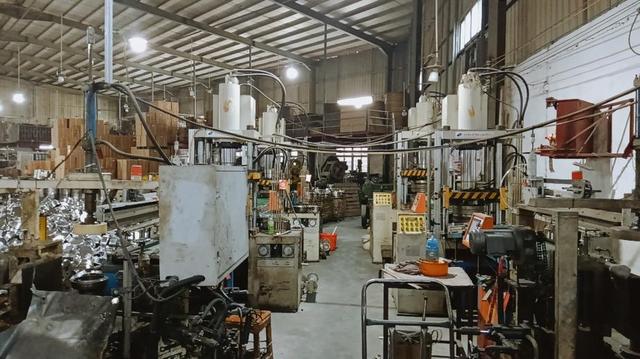
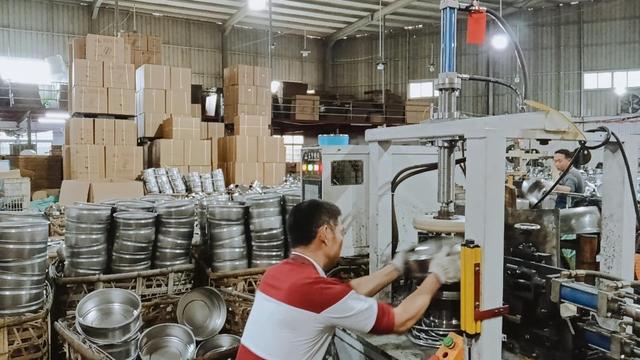
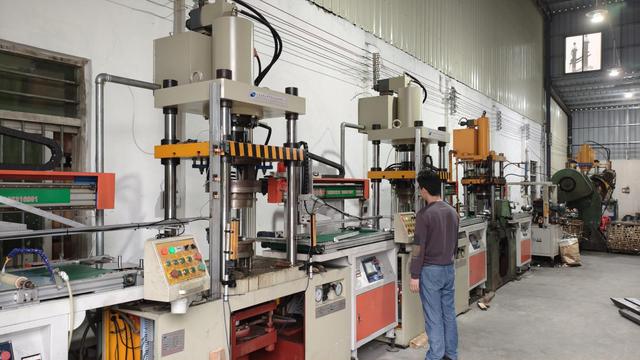
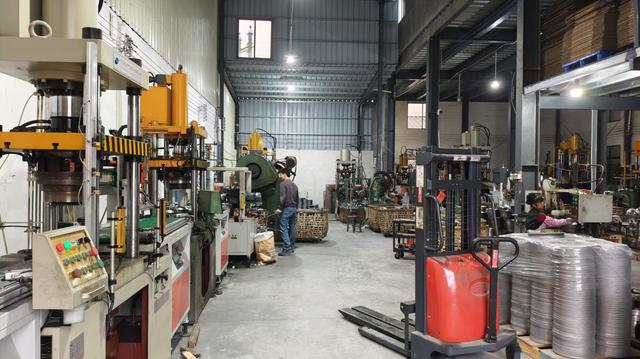
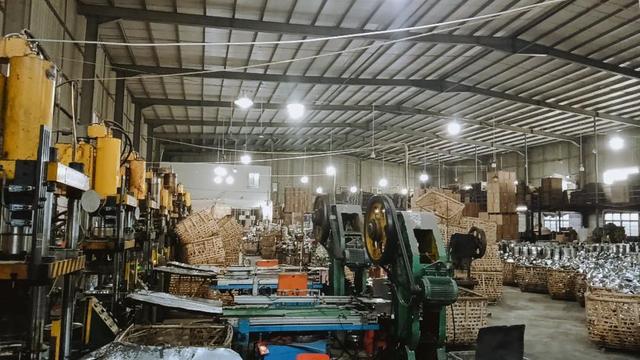
Modern factories in Foshan deploy hydraulic press arrays exceeding 800 tons for deep-drawing single-piece food pans and covers. Robotic buffing systems yield deep, mirror-polished finishes (exceeding Grit 800) with minimal manual variation, keeping defects below critical thresholds.
Foshan manufacturers implement rigorous testing routines, including salt spray tests for rust evaluation, structural stress tests for hydraulic lid durability (validated up to 80,000 cycles), and ultrasonic thermal mapping to ensure there are no hot spots in double-walled insulation.
Adapting commercial chafing dishes to meet the technical standards, culinary culture, and preferences of diverse global regions.
Different markets present distinct mechanical and design preferences for food warming containers:
A professional manufacturer specializing in stainless steel cookware and kitchenware solutions for residential, commercial, and professional culinary applications worldwide.
Located in the heart of Foshan, Guangdong Province—China's preeminent manufacturing hub for high-grade kitchenware and household goods—Foshan Sarap Kitchen Co., Ltd. has established comprehensive capabilities in cookware design, precision manufacturing, quality control, and international export logistics. Over more than a decade of development, the company has integrated specialized technology pipelines to satisfy demanding OEM and ODM specifications.
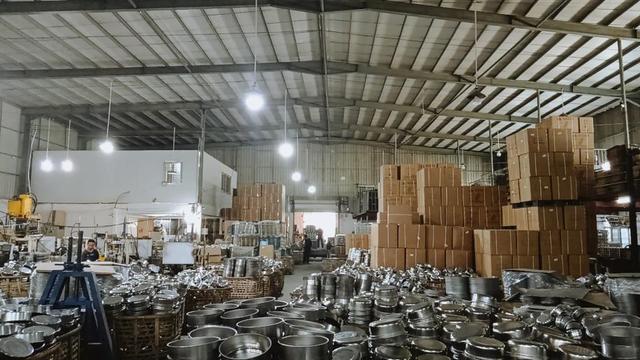
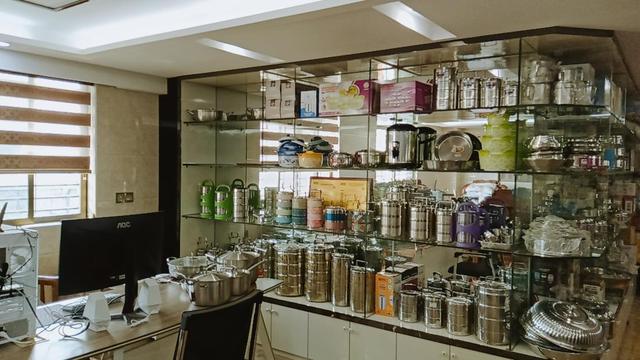
Our production facilities utilize automated polishing lines, hydraulic deep-drawing equipment, precision sheet-forming machinery, and rigorous quality inspection stations. This infrastructure ensures the output of durable stainless steel cookware products, including professional chafing dishes, frying pans, stock pots, steamers, and customized hotel banquet ware.
Whether you represent an international cookware brand, a hospitality group, a foodservice equipment distributor, or an online catalog vendor, our engineering and sales teams work in synergy to customize handles, metal gauges, lid styles, branding marks, and packaging requirements to help you capture market share.
Innovation is key to our growth strategy. Our engineering team continuously refines multi-ply clad base configurations, induction compatibility, and ergonomic handles while minimizing material waste. We perform strict batch testing on every production run, verifying material chemical composition, polishing smoothness, and welding strength before packaging for international logistics.
Today, Foshan Sarap Kitchen Co., Ltd. exports to North America, Europe, the Middle East, Southeast Asia, South America, and other global markets. Through our customer-focused manufacturing framework, we offer global procurement teams a stable, reliable, and cost-effective partner for long-term supply chain resilience.
Anticipating changes in design, technology, and sustainability for the next generation of food warming systems.
Modern chafers are shifting from fuel canisters to built-in PTC (Positive Temperature Coefficient) heating elements and digital controllers. These units maintain precise serving temperatures (typically 65°C to 75°C), preventing food from drying out or cooling down, while minimizing power draw.
For induction setups, multi-ply encapsulated bases (typically enclosing an aluminum core between layers of 18/10 stainless steel and magnetic 430 stainless steel) are standard. This configuration provides fast, even heat distribution across the bottom of the food pan.
Physical Vapor Deposition (PVD) has replaced traditional chemical electroplating for gold, rose gold, and black metallic finishes. PVD coatings are highly resistant to scratching, food acids, and chemical cleaners while eliminating hazardous wastewater during production.
Answering key logistical and technical questions for global sourcing managers and wholesale buyers.
Grade 304 contains a higher nickel content (minimum 8%), which provides excellent corrosion resistance against food acids, moisture, and salt. Grade 201 replaces part of the nickel with manganese, lowering material costs but making it more susceptible to surface rust if not carefully dried. For commercial use, we recommend SUS 304 for food contact surfaces and pans, while SUS 201 can be utilized for outer structural frames and stands.
Yes. Many of our premium chafing dish designs feature an encapsulated multi-ply base containing a magnetic stainless steel layer (typically SUS 430). This allows them to transfer heat efficiently on modern induction plates as well as with traditional fuel canisters.
Our hydraulic soft-close hinges undergo lifecycle testing up to 80,000 cycles. They are designed to prevent accidental slams, providing smooth, controlled closure from 90° down to 0°, ensuring safety and quietness in busy buffet lines.
We pack each unit using thick EPS molded foam protection inside a 5-layer corrugated export carton. For larger shipments, we utilize palletized configurations with stretch wrap protection to prevent shifting and denting during sea transit.
Yes, we provide full OEM and ODM services. We can laser-engrave your brand logo, manufacture custom-shaped handles, adjust the depth of the food pans, and customize outer boxes to match your retail or distribution identity.
Our materials undergo regular testing to meet FDA, LFGB, and European Union food contact safety directives. This guarantees that no heavy metals or contaminants migrate into food, even during prolonged heating cycles.
Standard lead times run between 35 to 45 days after deposit confirmation and sample approval. This accommodates stamping, polishing, final assembly, and quality assurance testing.
We recommend washing with warm water and a neutral detergent, followed by immediate drying with a microfiber cloth. Avoid using abrasive steel wool pads or chlorine-based cleaners, which can compromise the protective passivation layer.
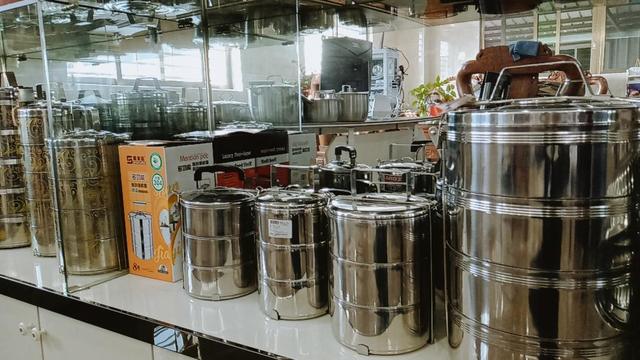
A comprehensive inventory of our advanced tri-ply culinary vessels, specialty pans, and complete commercial stockpot sets.